TRIGGER WARNING – CONTENT WHICH MAY OFFEND
My son is very interested in what is going on in the world, very keen to understand why people are doing the things they are doing. Like all of us, I guess, he is trying to ascribe meaning to something that just seems so…meaningless I guess.
I am a history graduate, and I am incredibly passionate about the subject. One of the reasons I am so passionate about history is because I believe that there are parallels to be found between it and what we are experiencing in today’s world because, essentially, I don’t think human nature changes that much. But also because people refuse to learn from history which means it is, unfortunately, too often repeated. I am equally passionate about politics much to the horror of my husband because I’m not shy about talking about it!
It’s when these two interests collide that I can get really animated, though.
My son is, like his mother, passionate about history and is fervent of his dislike of Trump and what’s going on in the world at the moment. The other day we chatted about what happened in Minnesota when the ICE officer shot and killed the woman in her car. I’m going to say it – all the evidence I have seen strongly suggests that he walked in front of her car. That she didn’t weaponise her car, he did. And he aimed for her when he shot, not the tyres as is the standard practice when confronted with this situation. My son asked me why someone would do that. He asked me why I thought someone would want to join an organisation like ICE and carry out the things they are in the manner in which they are. And as we talked, I was reminded of the undergraduate dissertation I wrote.
In short, my dissertation was a critique of two books which examined the same evidence (a group of German policemen sent to Eastern Europe not to carry out law and order but to carry out mass killings of Jews) and came to vastly different, but singular, reasons for the actions they took. The thing that marked this group out and exposed the ‘I would have been sent to the Eastern Front if I didn’t do it’ lie for what it was, was the explicit statement given to them by their Commanding Officer on the first day they were given their orders that if they didn’t want to carry them out, they didn’t have to. About three stood out of the line, refusing to participate, but the vast majority stayed in that line and went on to the village where they rounded up the Jews. In the end, some more did stop both during that first killing and then subsequently, but the majority carried on killing becoming more and more brutalised as they did so and more and more reliant upon the alcohol the Nazi regime provided in abundance to them.
In my critique, I pointed out that a singular reason why a group of people carry out orders they are given does a disservice to the complexity of the human mind. One historian had argued that the rationale for not stepping out of that line was peer pressure (forgetting that three had stepped out of the line), the other endemic anti-Semitism (equally forgetting that one of the policemen found himself walking alongside a Jew he had worked with and known on a friendly basis in Berlin). While both peer pressure and anti-Semitism are highly likely to be reasons for some, they will not be the only reason for everyone. Some could have caved under peer pressure, some could have been so deeply anti-Semitic they were prepared to murder for it, but equally it’s credible that one or two were latent psychopaths. My assertion was also that others could have been seduced by having the ultimate power of life over death. Most of the men in these teams had been blue-collar workers in Germany, likely leaning more to the left than the right politically, and were pretty powerless under an authoritarian regime. Suddenly, they are powerful in Eastern Europe because they are the Übermenschen and those they were killing (including Eastern Europeans themselves, though they didn’t murder them en masse), the Untermenschen. For some, that reality must have been seductive enough to quash any morality they may have had. The point was that no one group of people has the same reason for committing the same act, they will have their own personal drivers.
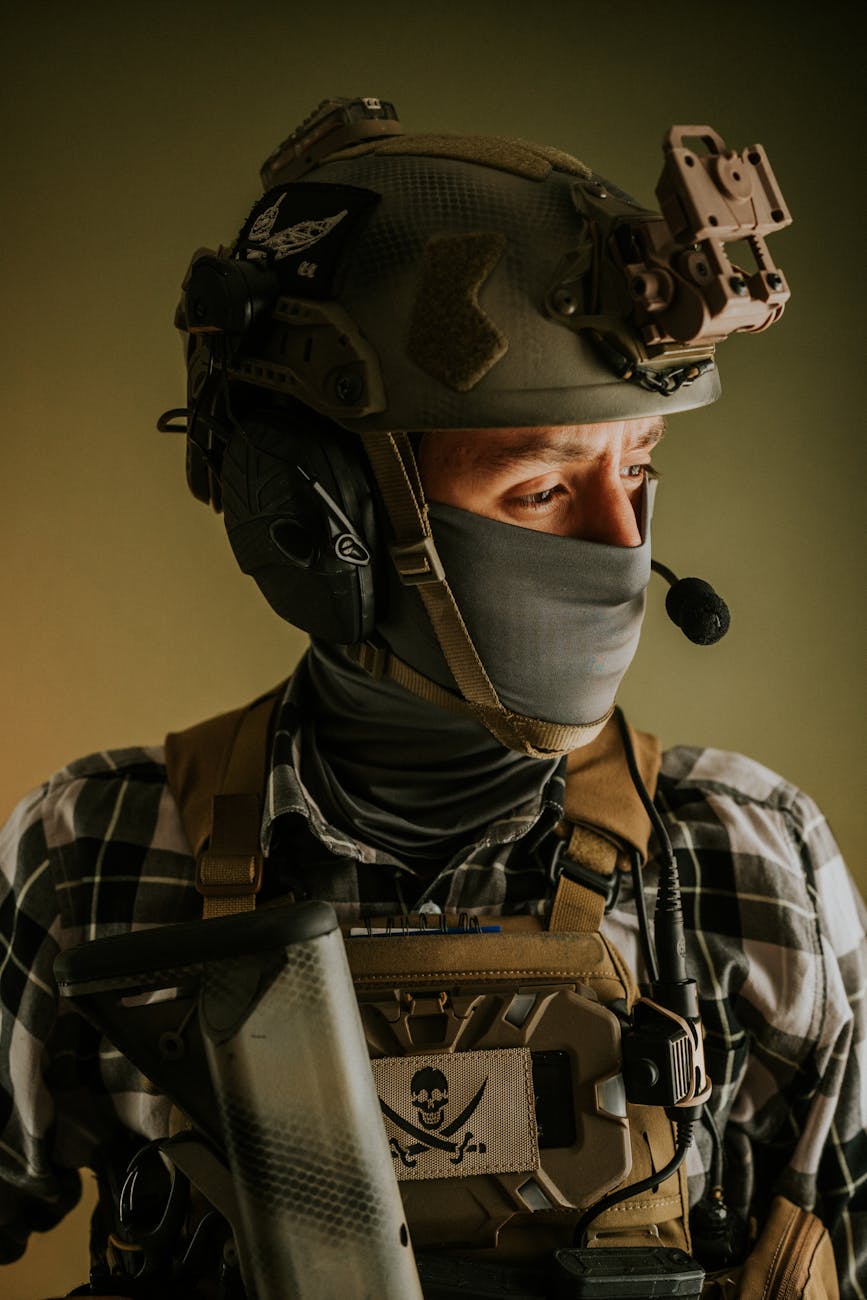
I was reminded of this because that’s how I think ICE operates. We can blame Trump and his minions for their actions, and we should, but they don’t pull the trigger. They don’t step in front of a woman’s car and shoot at her directly. No, that is down to the individual agent. Trump and his ilk don’t cover their faces with masks, scarves and sunglasses so they can’t be recognised like they’re some kind of special forces operative or in some kind of action movie. They don’t strut around streets pulling people out of their cars, their homes, their places of employment under the guise of arresting ‘illegal immigrants’ and ‘criminal illegal immigrants’ (84% of those held have no criminal record) but really just targeting anyone who isn’t white. They aren’t the people shooting other people.
You can hear the excuses now. ‘I was ordered to do it’ or ‘it was my job’ or ‘I’m a patriot’ or some such nonsense. If you are ordered to open fire and potentially kill or seriously injure someone, surely there is a smidgeon of morality in you that says ‘no thanks’. For some, I am sure that there is. For others, it’s seductive to be that powerful. For some, they are latent psychopaths. For others they are blatant racists or zealous patriots (not necessarily one and the same thing). And for others still, perhaps it’s the lure of the salary that has them doing what they are doing. But in my mind, they are no different to those German policemen. It’s just that their targets are different.
I wonder what they tell themselves when they get home at night. The German policemen were fed alcohol, so they didn’t think, but for some it was too much and they stopped participating (with no punishment for that). I wonder how many ICE operatives have resigned from the job, disgusted at what they were being asked to do. I wonder what the staff turnover rate is. I hope it’s high, I’m not sure it is because the job itself appeals to a certain type. Many of the German policemen after the war who agreed to be interviewed talked about terrible nightmares and long-term emotional and mental torture. That’s not a legacy anyone should aspire to and is the part no one talks about.
All of this tells me that, sadly, human nature hasn’t changed in 80-odd years. But this time there is a difference. We now have evidence of how these things turn out in the end; we have history as our guide which tells us that we must be honest about what is going on, examine our consciences and work collectively to stop it.
And not let it happen in our own country.
 Louisa Simpson