


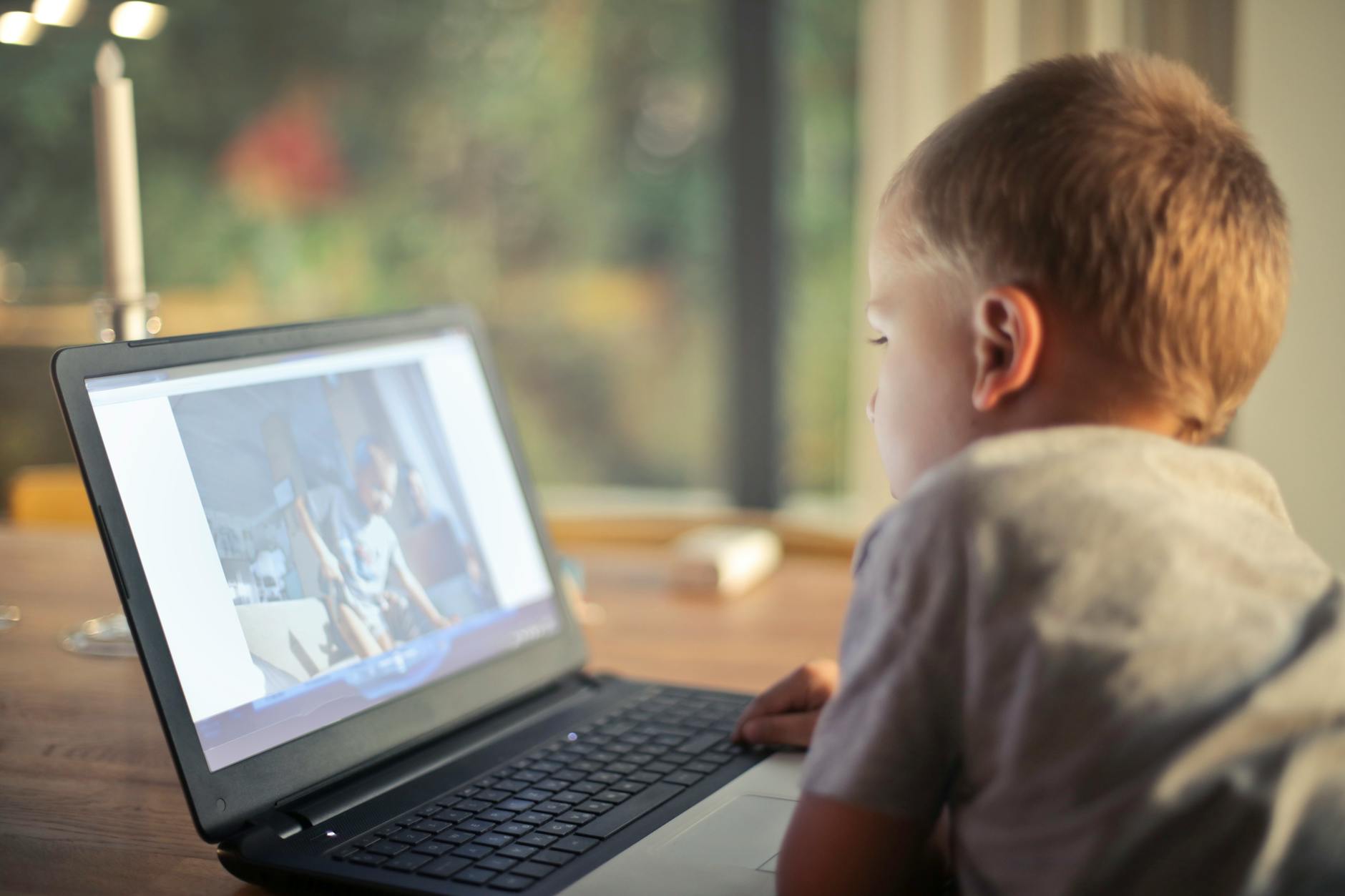
Yes, I do remember life before the internet. Very clearly, because I was an adult when it emerged into society at large. Has the internet changed our lives? No, not really. Except when it comes to children…and the adults of tomorrow.
I am a born researcher. There’s nothing I love more than immersing myself into a subject and going down the rabbit hole of research. Which is probably why I have a history undergraduate and postgraduate degree. I love that moment when you stumble across a piece of information that makes you gasp out loud because it makes everything make sense, or you didn’t know it before. For me, it’s a great feeling. Studying for my undergraduate degree was pre-Google, and it may have existed for my postgraduate degree but it didn’t have the wealth of information it now contains. So, unfortunately, my research did not mean checking on Google first. It meant trawling through reams of books, not having time to read them all before it had to be returned to the library or before the essay was due to be submitted, so it meant being very focused on the information I needed and moving on.
I love physical books. I love the noise they make when you open them especially the hardbacks that are covered in that shiny, plasticy covering. It just makes the most gratifying noise. I love turning physical pages, and the smell of them. And I probably love and appreciate them more now than I did back then, in a time when we didn’t have e-readers. When I was at university, the only document that had to be in a typed format was my dissertation, the rest could be handwritten. Imagine that! But, back to the research. The books were great, I spent most of my life in them and amongst them in the library at university, and extracting the information was always a great feeling. But, trawling through them as I had to do for four years in both degrees meant I was put off them for a while afterward. I remember thinking that I would be quite happy if I didn’t see another book for a little while.
Now, though, when I do research for my writing I can just turn to Google to point me in the right direction. And it’s marvellous. It cuts research time down significantly, I get the information I need very quickly, and I get pointed in the right direction for more in-depth research. Which is both a blessing and a curse, because I can fall down that rabbit hole for a very long time. But have a glorious time whilst doing so! So, the internet has made life easier for research though I don’t spend time now in libraries which I do miss. In fact, I think I have barely set foot inside one unless it has been for, and with, my son.
I’m not one of those people who thinks the internet is a terrible thing, I think it’s an amazing resource though of course it does have its drawbacks. The access to information as easily as the internet allows is both, in my view, a good and a bad thing. It’s like 24 hour news, there has to be constant content creation and that is a two-edged sword. The internet has enabled social media with one of the first incarnations being Friends Reunited, then Facebook. Both of those things have benefitted me personally because it meant I have been able to connect with old friends that I lost touch with through life, and keep in touch with friends and relatives overseas who I would otherwise have completely lost touch with. It has also helped me make new friends I wouldn’t otherwise have met, given me inspiration for, say, fashion and design, given me aspiration with the information available, and helped me through some difficult times with social media support groups. It has also, though, been less than kind and I have been targeted by trolls on occasion. Not often because I’ve never posted enough to interest them, but when they do pop up it’s unpleasant. I have also seen lots of misinformation which people blindly accept as truth and some of it has been frankly, scary.
The internet has made blogging a real thing, and I love that. It’s given people the platform to write where they might not have done before, which is marvellous. It’s the same with self-publishing, the internet has enabled that. But, we must remember, people did still do these things pre-internet. We wrote for magazines and periodicals instead, all the things the internet has put out of business, though writers didn’t get the instant feedback from readers, or any feedback at all. And books were still self-published either printed directly by the authors or serialised in periodicals and magazines in the hope, I assume, of discovery by an agent and/or publisher.
The reality is, everything people rail against the internet for already existed in the world. Anorexia, bulimia, suicide, loneliness, disconnection all existed before the internet. People can eulogise about the pre-internet world, but it was far from perfect. People still found love through singles ads in newspapers, they wrote letters to each other pre-email. It just took a lot more effort. And people were still trolls, they too wrote letters which were probably much easier to ignore than the comments now, though they can always be taken down. Rumours were still started based on zero information, including by the media, before the internet made them more available and more easy to spread. All the internet has done is taken the best and worst of people and enhanced it. It was easier to hide the horrible side of humanity before the internet because, mostly, the information wasn’t readily available so in that sense, I guess, people were a bit more carefree. The internet has made all kinds of information more available, and that has made us a little less carefree, I think.
The internet allows for a greater awareness of abuse which is hopefully going to raise awareness of it happening so we can either protect those more at risk of abuse better, and bring those who have abused to justice with incontrovertible proof of the abuse. We certainly didn’t have as much awareness pre-internet, and as we now know, shockingly terrible things happened for decades and no one was stopped. I think the internet has stripped away some of the naivety many of us had pre-internet days. Those perpetrating these crimes still did so before the internet, we just weren’t told about them or didn’t know about them at all. It isn’t that abuse has increased, it’s just that people are getting found out more. And that is likely due in large part to the existence of the internet.
Before the internet, and when I was a child, there were no computer games. We had to use our imagination, and I know that’s a well-worn view, but it is true. I was chatting to a colleague yesterday who is slightly older than me, and we agreed that television for children in the 1970s and 1980s was rubbish. It barely existed, even during the school holidays. I remember having chickenpox during the summer holidays of 1977, and being bored out of my mind because I wasn’t allowed out, the television was rubbish, and I had run out of books to read. The internet would have solved that because I would have had access to it and content (hopefully) suitable to a child that might have entertained me while I was banned from scratching and socialising. But the rest of the time, during the summer holidays I was out and about. I was over the park with friends, I was cycling with my friend, I was out. I got exercise without thinking about it, I got fresh air without thinking about it. Even when I was little, I remember being outside all the time, in the garden with my friend who lived next door one over. We used our imagination to play, because we had to, and we played sports in the garden getting exercise constantly. I did also have the luxury of a love of reading, so that kept me entertained and fed my imagination.
If I re-imagine life today without the internet, I think one of the big benefits of being without it is the fact that children would be less stimulated. They have endless ways of being stimulated now that it is very difficult for parents to ‘police’ all the time. There are iPhones, tablets, X-Box, Playstation, Nintendo…all those things that are bombarding our children with lots of colour, noise, violence, and which is battering their synapses continuously. Then we expect them to sit still and quiet in lessons, and wonder why they find it virtually impossible (not that I think how we teach education is great, either). We wonder why children become easily overwhelmed in places such as supermarkets with their bright lights and constant bombardment of information of some form or another – why toddlers tend to have meltdowns in those aisles – when it has always happened, but they are generally more over-stimulated now. I honestly do not think ADHD and autism did not exist pre-internet, we just called it different things. With some forms of autism, we used to call it genius. It’s highly likely that I ‘have’ ADHD, which I would have had my entire life including the pre-internet days, but I increasingly think this is a learning style that is ignored, and is exacerbated by the over-stimulation of life today. Which is largely dependent on the internet.
So, if I am re-imagining life pre-internet, I am thinking of a life where children are a lot less stimulated, use their imagination a lot more, and still display signs of ADHD and autism just in different ways and, perhaps, not in quite such damaging ways of today.
Bullying still happened in the pre-internet days, I know because I was bullied at school. But when I closed the front door at home, the bullies couldn’t get to me anymore. While I was there, they couldn’t get in. Now, with cyber-bullying, that isn’t the case and there is no respite. Children are actually exposed to more bullying because of the internet.
Yes, there were paedophiles pre-internet, but they couldn’t target their prey online in the ‘safety’ of their own home as much as the internet allows them to. And children were not potentially exposed to a dizzying array of sexually explicit material that is wholly inappropriate and damaging to them as they are with the internet. And which is seeping into mainstream television because of our increased tolerance for it. I’m not a prude, I am no Mary Whitehouse, but the instances of, say, non-consensual choking during sex being on the increase is not coincidental. Nor is the rise of misogyny and the likes of Andrew Tait who has likely been impacted by the internet as a child as much as he now uses it to proliferate his vile attitudes towards women.
Overall, I think the internet is a marvellous resource and I would rather keep it than not. I think the freedom it represents for people to say what they think, to have a voice and access to information is marvellous. Which, I think, was the original purpose behind its invention for exchanging academic information around, I believe, the Cern programme. However, there are times when freedom can be damaging especially for our most vulnerable in society. And it wasn’t that any of this didn’t happen in pre-internet days, it did. It just wasn’t as easy to proliferate it. So, we need to find a way to allow the freedom it represents but be mindful of how we protect the innocent without using a sledgehammer to crack a nut.
 Louisa Simpson