This is an interesting title. Originally, the prompt was ‘What Sacrifices Have You Made?’ with it being open-ended I guess as to how you apply it. And it made me think…does anyone truly make sacrifices?
Very often the word sacrifice is used in a ‘look at what I gave up for the greater good’. We can martyr ourselves over the word. Parents can say to children ‘I sacrificed my career/figure/future for you’ when the reality is, there is no way the child asked for that sacrifice to be made. It was a choice made by the parents. The true wording for that is ‘I chose to give up my career/figure/future for you’. That is a whole different perspective. One is martyrdom, the other is taking personal responsibility for your own actions and their outcome, whether that outcome was specifically intended or not. We can choose to do things and, if we don’t think them through to the end, there is an unintended consequence we don’t like or appreciate. With parenthood, for example, we can choose to limit our career for our children. I know that I have refused to apply for jobs that I knew would take me out of the house for more than 12 hours a day because I wanted to see my son more. Did that limit my career? Almost certainly. Do I see it as a sacrifice? Absolutely not. It was a choice I made based on my desire to spend more time with my son. It was an unexpected consequence of motherhood, I’m not a hugely maternal person, so I didn’t expect to have this burning desire to not be apart from my son for too long. But, I did. What it boiled down to, really, was that I made a choice based on what my priorities were. And they were, in essence, my son and everything that entailed.
Similarly, I gave up a well-paid job in the City of London to go to university where my financial circumstances were much more constrained. I had to live on a much leaner budget, I couldn’t eat out as much as I had when I had been working and I couldn’t afford the holidays I’d had when I had been working. But the payoff for me was spending my time learning a subject I love, history, in a much greater depth, in proving to myself that I had the ability to achieve academic success, and to change my life. Because for all the material benefits I’d had through work, I was not happy. In fact, I was desperately unhappy working in the money markets. Some might say I made a sacrifice, I would say I made a choice to improve my life in the way that presented itself to me in that time. And I would not change it for anything.
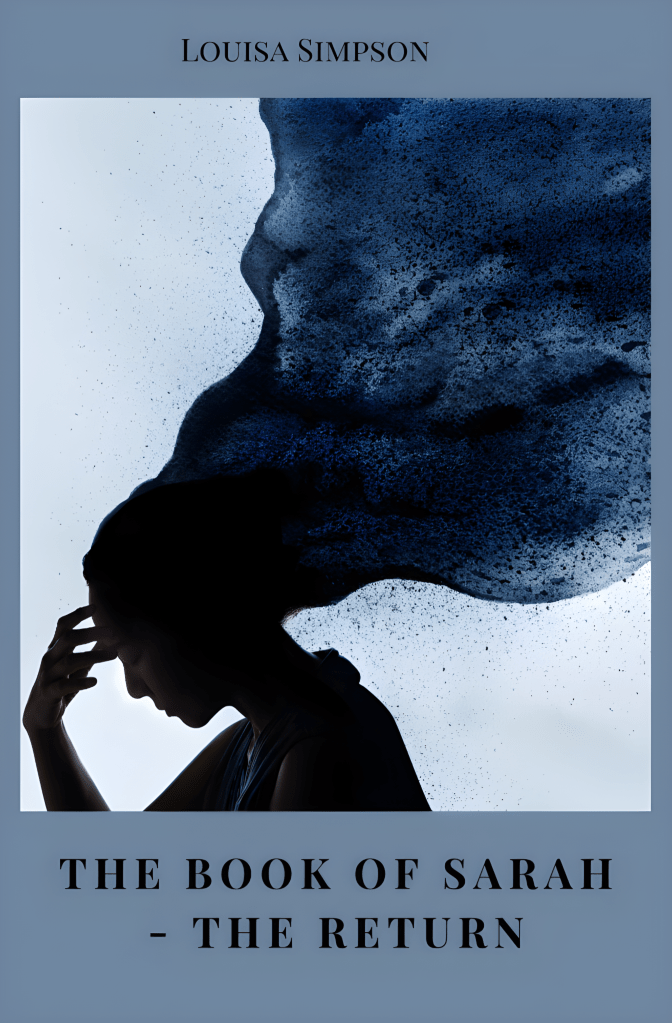
Sacrifice is also a word used about religion. In ancient religions, in the Bible and I am sure in other religious texts, there is the propensity to sacrifice for the sake of spirits/deities. Whether that be humans or animals, there is a lot about sacrificing to satiate those who are worshipped. In the Christian religion, this is personified by the sacrifice made by Jesus in order to save humanity. This is, actually, the premise of my Book of Sarah trilogy – that the central ‘good’ male character has sacrificed his life for the good of humanity because in so doing, it requires the sacrifice of the central ‘bad’ male character. The difference being, however, that he chose to be that for the sake of bringing balance to the universe. His soul chose to have repeated earthly experiences in order to help keep the balance between good and bad which would always end with the ultimate sacrifice. His life. And the central female character also chose, as a soul, to share her life with him even knowing that this would happen. Until it became a burden she could no longer bear. The only person who did not choose was the central ‘bad’ character. He was chosen, and he doesn’t sacrifice himself he is sacrificed. There is a distinct difference between the two – to sacrifice and to be sacrificed. His outcome, though, could be classed as karma given his role in life (as in my book), which he can relish a tad too much.
I personally struggle with any deity that requires the sacrificing of animals and innocent people for their sake. What does that say about the deity? Animals don’t choose to be sacrificed, and the implication is that by and large, people don’t either. It speaks to me of egoic deities, which is an oxymoron in my own personal belief system. To me, deities are spirits which means they have no ego. But then, I am not a religious person. I am a spiritual person, but I have too many arguments with some of the religious teachings to be called religious!
So, the word ‘sacrifice’ is troubling for me. In my book, Lucas doesn’t see what his outcome is as sacrifice necessarily. He sees it as the outcome of his life – human beings die, that is the way of biology – but the spirit, the soul, doesn’t. So for him, there is no sacrifice. But then, he is not left behind, Amelia is. So, to an extent, she does see it as her sacrifice. Yet, her soul chose to be with him knowing this outcome, so is it truly a sacrifice? She knows that his soul is eternal, as is hers, it is just that in an earthly life she is left on her own usually at points in history where being a lone woman is not easy. That is what has coloured her perception of her role in balancing out the universe.
I haven’t, in all honesty, thought of this before in any of my writing. I have always been the person who has disliked the martyr complex, being a victim, or in any way being overtly negative. I have had a lot of people in my life who have exhibited this, and it has never failed to grate on me. I have worked very hard to not have those traits, I continue to try and find the positive in all things that happen no matter how difficult. Someone said to me the other day that I am a true alchemist, turning something good out of something bad. So, the whole concept of sacrifice is an anathema to me. Because as with everything in life, there is always a choice. Even in my books, the concept of free will runs through. Of choice in which direction to take in our lives. The issue is, we have to take personal responsibility. Sacrifice implies that there is an external reason for doing something – your child, your parents, your spouse, your friends, your job etcetera – whereas choice requires you to take personal responsibility. And that is often the stumbling block for people.
When something doesn’t turn out the way we wanted, that unintended (negative) consequence, we rush to blame ‘other’. The external factor. If, say, your spouse asked you to stop doing something, and you don’t want to, if you still do give it up you are making a choice. You are deciding in that instance that your spouse is more important to you than what you are giving up. If the relationship then ends, or you end up bitterly regretting your choice, it is then easier to blame your spouse for requesting the sacrifice rather than yourself for choosing to agree to it. Obviously, I am not talking here about where there is physical and emotional abuse, that is more complex. We all do it, taking personal responsibility for a decision that doesn’t work out how you wanted is very difficult. Nobody wants to be wrong. But it is in taking that personal responsibility, in recognising your role in the outcome that we learn and grow.
I can honestly say that I have not made any sacrifices in my life. I have made choices in my life that may have led to me being restricted in some way later on, but I would not regard them as sacrifices because the payoff in that choice has been more important to me, or I have had other, more pressing, priorities.
 Louisa Simpson