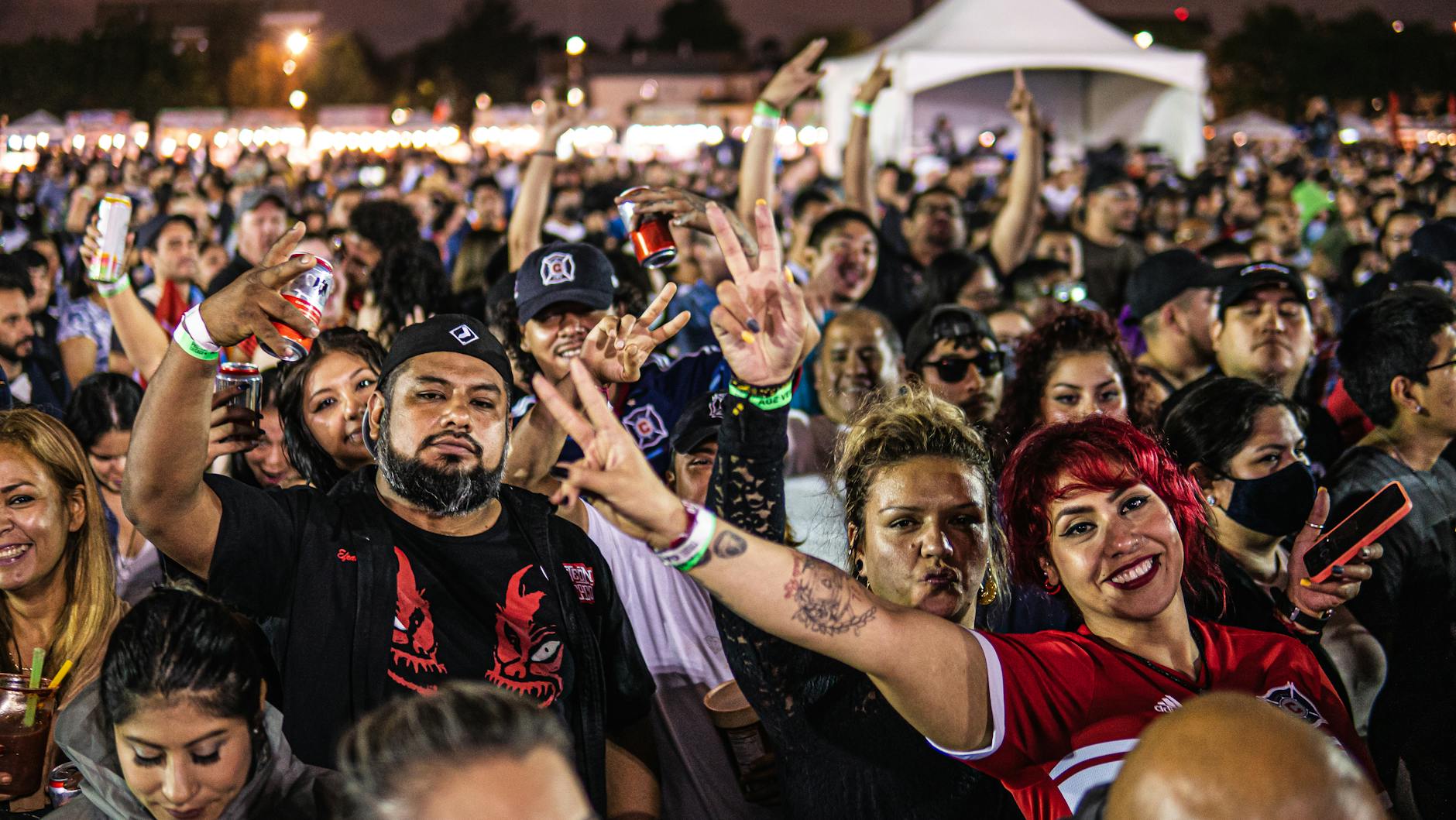
The idea to write this blog came to me in a dream – I might have mentioned before that I sometimes hear words shouted at me in the night, or I have dreams that ‘talk’ to me about certain subjects. Tribalism was one such dream, and one such topic. I have been continuously ‘reminded’ in subsequent dreams that this is a topic that I should pursue. So, I have, and it has been incredibly interesting.
What is tribalism? Well, the official definition is ‘the state of existing as a tribe, or a very strong feeling of loyalty to your tribe’ and ‘a very strong feeling of loyalty to a political or social group, so you you support them whatever they do‘ (Cambridge Dictionary). I have italicised those last words because for me, they were striking. Whatever they do. My own interpretation of tribalism is a sometimes blind affiliation to something – a thought/mindset/team etc. – that can be seen as superior or diametrically opposed to another. An alliance that can refuse to consider an opposing view. There is also neotribalism which ‘is a sociological concept which postulates that human beings have evolved to live in a tribal society, as opposed to mass society, and will thus form social networks constituting new tribes’. I was curious as to the difference between a tribal and mass society, so turned to Google which had this to say on it:
A tribal society is characterized by small, interconnected groups (tribes) with strong social bonds based on kinship, shared culture, and traditions. Mass society, on the other hand, is a larger, more complex social structure with less personal connection and more reliance on impersonal institutions and mass media.
I would argue that we have not evolved to live in a tribal society rather than a mass society. I would argue that, through sports, politics, religion, culture we have created tribal societies within the mass society. And that this, in part, is where the herd and pack mentalities of humans have really come into their peak.
As I researched whether humans are pack and/or herd animals, it was incredibly interesting how some people are resolute that humans are absolutely NOT herd animals. For me, it smacked of a completely egoic response to the very real truth that we are herd animals as can very often be seen by our behaviour. Hannah Arendt controversially (and rightly in my opinion) argued that the Holocaust was carried out not by psychopaths (those were the people who dreamed it up and ordered its execution), but by ordinary people placed under extraordinary pressure to conform. I agree with this wholeheartedly as I have just now realised that this supports the thesis I wrote for my undergraduate degree on this very subject. That while it may comfort us to think that those people who walked to the shooting site shoulder-to-shoulder with the Jews they were about to massacre, in one appalling example with someone they had known and worked with before the war, were psychopaths and latent murderers, the truth was the majority of them were not. They were just following the herd. And that we could have been one of them too, though we like to think we wouldn’t. A particular battalion of policemen, taken from the factories and blue collar jobs in Nazi Germany, too old for the armed forces but useful to the Reich nonetheless, were stationed in Poland with the sole task of being an execution squad (a vast number of Jews never even made it to the concentration camps). They were called to attention one morning and informed by their commander of what their task was for that day – to kill Jews. They were also informed (despite their later protestations of ‘being sent to the Eastern Front’ if they didn’t comply) that they did not have to do it. If they thought they could not carry this order out, they were to step out of line and they would not be punished. Two out of about 20 or 30 men did. Nothing happened to them. Two men does not constitute a herd, however, the other 18 or 28 do. As it happened, during the course of that day, and some subsequent similar ones, some of the 18 or 28 men decided they couldn’t do it, and stopped the murdering. Again, nothing happened to them. But the majority continued to murder, becoming over time immune to the act along with becoming alcoholics (they were given alcohol on their return to barracks). In the end, the Reich was concerned that these men would return to Germany as alcoholic murderers so gave the murdering work to others. I have always argued that amongst these ordinary German men, some may have been virulently anti-Semitic, some may have had latent psychopathic tendencies, but the majority were following the herd or bowing to peer pressure.
What is behind this? To begin with, the herd mentality is part of our survival instinct. If everyone is running in one direction, we will tend to follow in case they are running from danger. We might check in with some of those running to ask why they are, and the story they tell will likely bear only a little resemblance to the truth because it will have been embellished every time it is told to justify why they are running. So, it could be ‘I think I heard a gunshot so I’m running’ and end up being ‘there are multiple shooters randomly shooting people’ when the real truth may have been it was a car backfiring. But the survival instinct has kicked in, and everyone is running. There is no leader of this group, unless you class the person who initially started running as the leader, and no clear idea of where they are going or what they are doing just that they need to escape danger. This is herd mentality based on the primordial survival instinct which has been keeping us alive for thousands of years.
Another reason for herd mentality is a human being’s overwhelming desire to be liked and, therefore, to conform. This could also be linked to the survival instinct because to be included within a group greatly enhanced early man’s survival rates. So, in modern times, in an experiment repeated around 25 times, a person was selected as the naive person, and asked to identify which lengths of lines were the same. They were placed in a room with 18 other naive people who were all asked the same question – but those 18 other people had been deliberately placed there. 12 of those 18 deliberately chose the wrong answer, and the true naive person invariably copied them in every repeated experiment. The need to fit in, to conform, to be liked, was clearly more important than the need to be right or attempt to correct the majority. There was no clear leader in these groups, just the opinion of the majority.
In a pack mentality, there is a hierarchical structure. There is a clearly defined leader, who provides the safety and security the pack requires in order to survive. In prehistoric times, the leader allowed the pack to eat first because the quid pro quo was that in so doing, the pack would protect the leader when danger came. That the leader would organise the getting of the food, ration it, keep cohesion within the group and allow the group to eat first, but that the leader was to be protected first and foremost in times of trouble. It was an unwritten social contract if you like. The leader took on a lot of sole responsibility, sharing out collective responsibility, and was protected as a result. In today’s societies, this is clearly seen when we are working as part of a team, an organisation, in our communities. Invariably there is a leader who either comes to the fore whilst the team is working together, or who is chosen by the team. Or they nominate themselves and the team nods them in. They take on the mantle of responsibility themselves, they protect and care for those who follow them, they set out a vision and direction of where the group is going and what they are going to achieve, and in return they are paid more. BUT the leader always ensures that the team is well provided for first. That is the basis of good leadership – create a leader who has the drive and vision so everyone pulls in the same direction, a leader who takes care of the team above themselves in the first instance, and is rewarded with the team’s protection and acceptance that they will take more of the spoils ultimately.
So, humans are both herd and pack animals. In the absence of a leader, they follow the herd, and in the presence of a leader, they follow the leader. So, where does tribalism come into all of this? Well, tribalism is another dimension of this pack/herd mentality. It determines which herd you follow, which leader you look towards. Since prehistoric times, man has been sub-divided into smaller groups usually based on geographic location. If you were born on one side of, say, a river, there was bound to be another tribe on the other side of the river and perhaps you competed for the fish in that river in order to survive. So, you likely weren’t predisposed to the other tribe because they are competition. They may look different to you, so then they also become ‘other’ and in order to make one tribe feel better they might see themselves as superior to the other tribe. They might tell themselves that they are better at catching fish than the other. But the two will have rarely met to have a conversation at all, and the simple truth will likely be that they have the same values and principles as each other. But the survival instinct will pit them against each other to ensure that they catch enough fish for their tribe, and who cares about the other tribe. And there will be both pack and herd mentality in this behaviour.
We now live in mass societies on the whole with the majority of populations living in urban rather than rural areas. There is an idyll of rural areas where they are the last bastions of tribal societies as outlined in the table below, but frankly that is less and less true. I live in a tiny village in Suffolk and I while I know my neighbours vaguely, there is no kinship-based relationship. Equally, there is no sense of leadership as we have no formal structures around us such as a parish council, though we are ‘governed’ by the more remote Local Authority and have political representation on that even if we don’t have much contact from them as far as I can see, but we have no leadership from elders or any such individuals so it isn’t hierarchical though there is a wealth divide in the village between the social housing and the wealthy landowners where social mobility is limited. In the nearest larger village, it resembles more the characteristics of the mass society. There is an immediate leadership structure with the parish council, leading into the Local Authority, and so it is more formal. There are hundreds of people living in that village so social bonds are less personal, though many came to the fore during the pandemic more so than in the smaller village I live in, and the power dynamics are focused in institutions. There is less of a wealth divide, though it still exists, but I would not say there was significantly more social mobility in that village than there is in my own.
| Feature | Tribal Society | Mass Society |
| Size | Small, localized | Large, often urbanized |
| Social Bonds | Strong, intimate, kinship-based | Less personal, more impersonal and institutional |
| Leadership | Informal, based on elders or respected individuals | Formal, hierarchical, centralized |
| Power Dynamics | Egalitarian, less emphasis on hierarchy | Stratified, power concentrated in institutions |
| Social Mobility | Limited | More fluid, influenced by various factors |
The interesting thing, though, within both societies is that there will be tribes within them. There will be political differences within them, in fact there most certainly are, there will be different religious practices within them – again, there definitely are, there will be different sporting allegiances and preferences, not everyone supports Ipswich Town Football Club, and there will be different cultures within the people living in these areas. Very different outlooks on life will be very evident within them. And all of these tribes are generally becoming increasingly more polarised.
What is very clear, however, is that human beings are meant to be together, not separate or isolated. We are supposed to be connected, supposed to be in some form of community. But increasingly, we are being pulled apart through ever more entrenched forms of tribalism. Begging the question – who benefits from this?
 Louisa Simpson