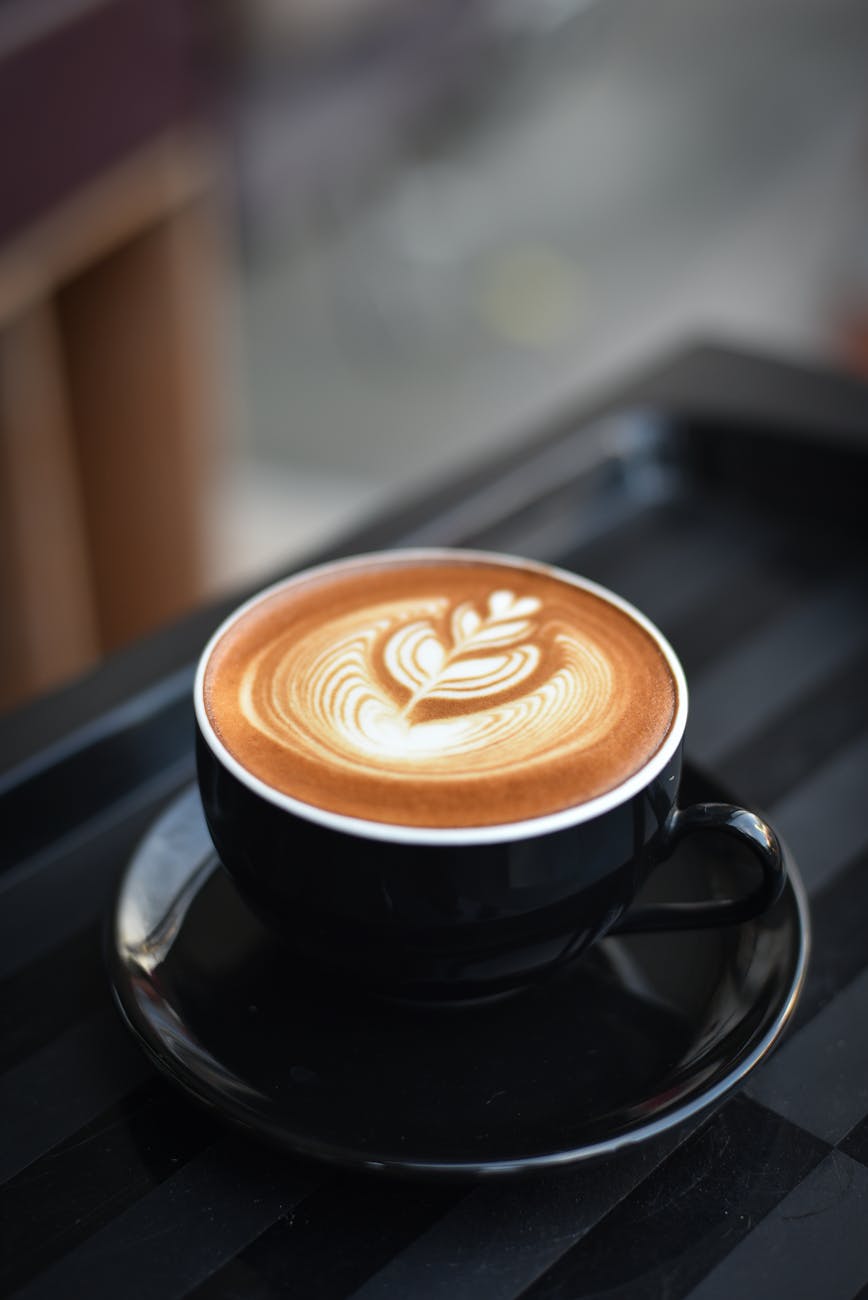


Interesting question…5 everyday things or 5 things every day that bring you happiness? I can say without a shadow of a doubt that of the 5 things I do every day, coffee is something that brings me happiness. And a cup of tea. The chirping of the birds is always uplifting and I relish my everyday meditation practice. And, finally, an everyday thing that brings me happiness is reading. What is everyday for one person can be once in a blue moon for another, so here are my five in detail.
Coffee
That first cup of coffee in the morning. I love it. As it comes, without milk, it sets me up for the day. I don’t know if it’s a placebo effect because caffeine doesn’t tend to keep me awake at night, but that first hit of caffeine in the morning does wake me up.
Legend has it that it was discovered in ninth century Ethiopia by a goatherd whose goats became very excited after eating some berries one day. He took the story to the local monastery where they decided to dry the berries and make them into a beverage. It didn’t hit the UK shores until the seventeenth century and has been a staple in this country ever since with the first coffee house opening in Oxford in 1650 long after the coffee houses of the Middle East. An alternative original story is of an exiled sheikh, Omar, who tasted a berry when hungry and found it bitter, tried roasting it which made it hard so ended up boiling it and voila, coffee was born. It kept him awake for long hours and as a result he was welcomed back to his homeland and venerated as a saint. It found its way to Europe via the Venetian trading routes where it was initially greeted with scepticism – ‘the devil’s cup’ – because of its links with Islam. In the sixteenth century in the Middle East it even had its own form of Prohibition for a time until the ban was lifted after a decade or so because of the concern of the governor of Mecca that the men would come together in the coffee houses and discuss his ineffective rule. The governor was executed by the Turkish Sultan in the end for installing this ban.
For me, it is that ability to wake us up that I value from it as well as its taste. I’m sluggish at best first thing in the morning, not being a morning person naturally, so I look forward to that first sip. I am choosy about the type of coffee I use, though, as I find a lot of it can be a bit too harsh. I like my coffee, as the saying goes, like I like my men. Smooth. Making that cup of coffee is also the thing I can do without needing much of a thought process before I do anything else that requires me to be out of autopilot! If I am not working, I will continue to drink coffee until lunchtime before the English in me kicks in and the tea is made for the afternoon.
Tea
A cup of tea. I’m drinking one now as I write this. I never used to be much of a tea drinker, now I have to have my afternoon cuppa as it brings me some kind of sense of comfort and happiness.
Like coffee, tea was introduced to the UK in the seventeenth century though was at first the drink of the aristocracy and royalty, served ironically enough in the coffee shops initially. Charles II’s wife, Catherine of Braganza, even had a chest of tea as part of her dowry and it was she who brought it into favour in the royal court. The origin of tea also comes with its own legend. In 2737BCE, Chinese Emperor and renowned herbalist Shen Nung was sitting under a tree while his servant was boiling drinking water. Chinese mythology states that a leaf from a Camellia sinensis, or tea plant, fell into the water and Shen Nung decided to taste the concoction. And so, tea was born. There are various other legends surrounding its origins but it did not start to become a popular drink in China until the eighth century under the Tang Dynasty. The East India Company brought tea to the UK but it was originally the Dutch who brought tea to Europe in the 1600’s. Samuel Pepys was the first recorded person to sample tea in England, the jury appears to have been out on it for him, but it was Catherine of Braganza who popularised it two years after Pepys wrote about it. Tea was ridiculously popular very quickly but was also ridiculously expensive because of…tax. 119% tax was imposed on tea until 1783 when William Pitt the Younger slashed it to 25% because the illegal smuggling of tea was rife. That it took over 100 years after its introduction to reduce the tax is really staggering.
For me, my preference is Earl Grey tea and I do love an English Breakfast but my most regular tipple is PG Tips. I restrict myself to 3 cups a day, I don’t know why really, but I do relish them. It’s the first thing I do when I get in from work, put the kettle on to make the tea, or if I’m at home it’s a drink I will have after 2pm. I love an afternoon tea as well, the invention of the Duchess of Bedford I think in the nineteenth century. A cup of tea is an everyday ritual for me and I thoroughly enjoy it!
Dawn Chorus
I live in a rural area so birdsong is prevalent all day long. But by far my favourite is the dawn chorus, even if it is ridiculously early when in June and July (4.30am). And even if it is, apparently, not a ‘good morning I’m so happy to be alive song’ but actually a ‘don’t mess with my manor’ and equally a ‘do you fancy me’ song it brings me inordinate happiness.
It’s largely sung by male birds to attract a female mate whilst simultaneously warning other male birds away. It’s so beautiful, you can’t help but smile as you hear it even if what it is for is potentially violent (the territory protection). It’s obviously more pronounced in the mating season but is also triggered by sunlight. The birds can sense the coming sunrise and the first rays of it trigger their song. As the days get longer and warmer, the birds’ hormones are shifted which then also triggers their song. As I type this, I can hear the birds in the garden singing away and I can’t help but feel happy as I listen.
It’s a wonderful sound, and I defy anyone to resist a smile if they focus on it. I was in the garden earlier, and I realised the gorgeous cacophony around me. It was truly beautiful, all the different sounds the individual birds made which together, made a stunning symphony. There is a particular birdsong I hear occasionally which is that of the red kite that has taken to flying above our house sometimes, and it’s just wonderful. I also love to see the birds, especially the smaller ones, making a beautiful noise the volume of which is disproportionate to its size. Apparently, young birds learn the song by listening to their adult counterparts which can lead to regional variations or dialects. Which means that there will be a cockney, Scouse and Geordie version of the dawn chorus!
Meditation
I make sure I find time – 10 or 15 minutes a day – to meditate, every day. It helps me to centre myself, to ground myself, and to help set me up in a positive frame of mind every day. Sometimes I listen to guided meditations or I just follow my breathing. It helps my mental health enormously, and I can tell the difference in my mood before and after a meditation. I try to meditate as early as I can in the morning, but one of the beauties of hearing the dawn chorus is that I have that Theta wave state for longer in the morning. That state when you are not quite awake yet, but you’re definitely not asleep. All sorts of thoughts and aha moments can come to me then, which is augmented later by my meditation.
Meditation is a stalwart in strong mental health. I read a headline statistic the other day that the age of the brain of someone who meditates regularly is 9 years younger than of someone who doesn’t. Basically, it keeps your brain healthy which has to be a good thing. I first discovered it after I had cancer as a means of regulating my nervous system. I am pretty sure that the extreme stress I experienced at work in particular didn’t help me in bringing about the cancer, and I know I can be prone to stress because I am an overthinker and trying-to-be-reformed perfectionist both of which create increase it significantly if not managed. Being in prolonged flight, fight or freeze mode is never a good thing with the unchecked creation of cortisol around the body, but meditating, with its focus on deep breathing, helps you get into rest and digest even if only for a while.
Reading
I end every day with reading. It’s something I look forward to because it is reading for pure enjoyment rather than for studying, work or research. I have loved reading since I was a child when I got an extra 15 minutes before I had to go to sleep so that I could read my book. Obviously my Mum had built those 15 minutes into my actual bedtime, but to me it was an extra treat. The result is that I cannot go to sleep properly unless I have read something, even if its only a page. The other result is that I can be awake for a lot longer than I should be if I have a particularly good book! But there is nothing in life that gives me greater happiness than a really good book that I can’t wait to delve into when I go to sleep. I mourn when they end, and have been known to re-read certain books time and again because I love to get lost in the story. Equally, there is nothing more frustrating than a book that you have looked forward to reading only to find it’s, well, not that well written.
Reading before going to sleep can actually improve the quality of your sleep because it is a calming night time routine (depending on what book you’re reading, of course! I remember reading The Shining and deciding it wasn’t good bedtime material!). With the routine of reading before sleep, you are signalling to the brain that you are getting prepared for rest so it starts to set itself for that next step. It is also a stress reducer – except The Shining! – because when you are reading you are closing down the monkey mind and focusing your attention on something else rather than the anxious thoughts racing through your head. Reading generally can improve your vocabulary and your comprehension levels as well as consolidating memories. There is also the possibility that it can slow down cognitive decline.
So, these are the five things I do every day that I love and bring me happiness and are, for me, five everyday things that I love and bring me happiness.
 Louisa Simpson