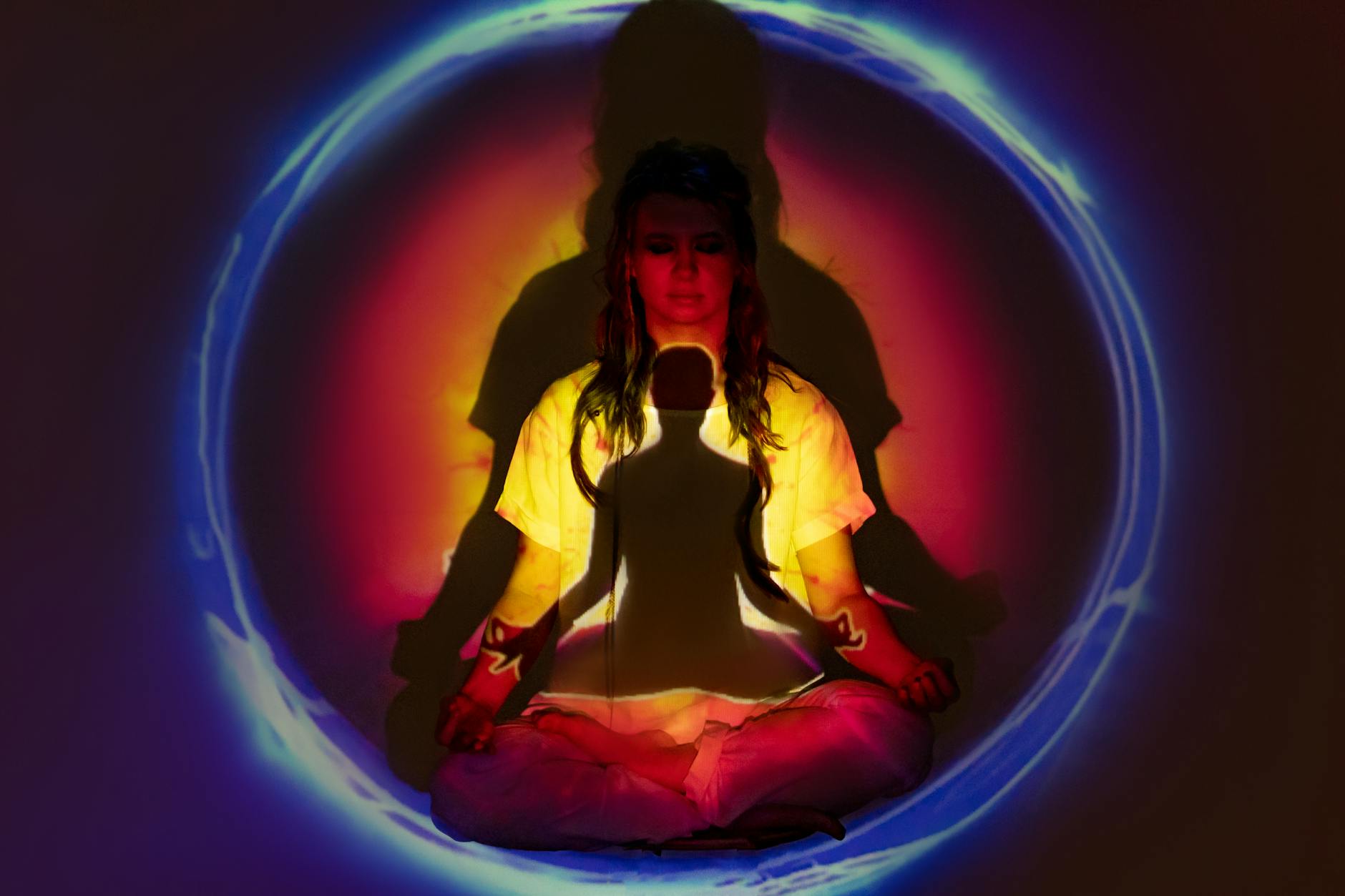


Everyone is unique, that has to be a given. The question is, especially amongst siblings who share the same DNA and genetic pool…how come? The answer – your soul.
In The Book of Sarah trilogy, there are three main characters and an assortment of secondary characters. The book is based on the interactions between their souls which are eternal, locked in human existences which are not. They are clear throughout the books that the only constant throughout all the lives they have lived together is their soul. It has remained steadfast for thousands of years but their human personalities have all been different over those thousands of years. Personalities that they do not relate to in subsequent lives, only the soul that resided within them. It is the souls that they either love or hate, souls they recognise as having experienced in previous lives, souls that they remember first and foremost, the human aspects coming in a very distinct second. It is their souls that make them unique as individuals. Their souls who know their purpose in life, though as they are enlightened beings they know as humans what their purpose is unlike others who are not as enlightened, who are on a journey to discover their soul purpose. The characters know to prioritise their souls and what it is telling them though they are human and often their egoic minds come out leading to actions that can be at odds with their soul purpose. Which makes them interesting as characters to write.
So, what is our soul? And what is our egoic mind? Our soul is that eternal part of us, the connection between us and the universe. The part of us that is integrally linked to the collective conscious, that is transmitting to us constantly from both the universe and the collective conscious. Curiously, it is the part of us that we are adept at ignoring. It is not our subconscious mind, that is something entirely separate, as it is separate to our conscious mind. I never said we weren’t highly complex beings! Our soul knows the contract we signed before our birth, the agreement we made of what we would come to this life to learn. The soul is on a relentless pursuit of knowledge about life, about who we are and what we are here to do. It is an insatiable sponge for learning, and unfortunately we learn more from the hard times than we do the good. Our soul is inherently good, it has no sense of limiting beliefs because it knows there are no limits on what we can achieve. That is where it differs from the subconscious mind which clings onto limiting beliefs because they provide certainty which the egoic mind craves. The spirit basks in uncertainty because that is what it is here for. So, there is a tension between our soul and our ego that can never truly be settled. But is what makes us unique.
This does play out in real life. If I think of my childhood best friend, she was one of three girls. The youngest. Her mother was hospitalised with a nervous breakdown, possibly undiagnosed post-partum depression given she had the three girls relatively close together (think Irish triplets), when they were all young. Their father worked full-time and wasn’t in a position to care for the girls while his wife was in hospital, so they were sent to live with his mother until his wife had recovered sufficiently. So, they each had essentially the same experience as each other – a heartbreaking time and a period of being separated from their parents, an experience that undoubtedly shaped them. Yet, they had a completely different way of demonstrating that. The eldest daughter became an introvert, never having a boyfriend at school and seemingly having difficulty making real connections with people as she never had a large circle of friends. She was utterly resistant to change, and would have married her first boyfriend (who she met at work, a company very local to home) had he not tragically died. She did go on to marry her second boyfriend years later. She never really went out, preferring to stay at home and close to her parents until she moved out to get married. She never bought her own property, and never sought to live on her own. She had a very limited social life and remained with the same employer for many years. As the eldest, she had her own bedroom so was the envy of the other two and I would say she wasn’t especially close with her sisters. Her focus was on her parents, and she had the closest relationship with their mother. She was a nervous person, quite shy though she could have a very caustic manner about her when she felt slighted. The middle daughter was very different. She was an extrovert, had lots of friends, a very busy social life and had lots of casual boyfriends. She was hardly ever home, and she went to work in London which increased her friendship base and social life. She was incredibly close with her father, not so much with her mother who she argued with a great deal. It was as though she couldn’t bear to stay in the house and as soon as she could, moved out. She didn’t understand her older sister’s behaviour and tried to get her to be more outgoing when her sister’s fiance died but it didn’t last long and she soon gave up. I wouldn’t say the two of them were close, really. She had a very complex relationship with her younger sister. In personality and looks they were the most alike, and as they shared a bedroom they also sometimes shared confidences. But they argued the most with each other, as sisters do, and when they grew older never socialised with each other. I always got the impression that the middle daughter was focused on looking out for herself. She married relatively young, and divorced not long after before marrying again a few years later. As for the youngest daughter…she was pretty emotionless if I’m honest. We had a co-dependent friendship really for very many reasons in both our childhoods but she could be capricious and spiteful at times. I didn’t understand then, but now I can see she was not close to either parent particularly, certainly she did not like her mother, and was closest to the grandmother who had taken them in as, in her case, an infant. When she died my friend was devastated, and came out of that experience almost seemingly determined to be close to no one. Again, she did not have a wide circle of friends and was close to none with the exception of me. But even with me, she didn’t confide much and as we grew older, her sole focus was on having a boyfriend so to her that meant being perfectly presented. And she was. I remember my Mum asking why I couldn’t be more like my perfectly turned out friend as I had my nose in a book, resolutely not interested in having a boyfriend. My friend had very complex relationships with men, pulling them in and pushing them away until they almost went mad with the confusion of it all. She had no real, lasting attachment with any of them and invariably ended up cheating on most of them as she lined up the next relationship. It was purely transactional, and often in the pursuit of money (her childhood had been financially difficult).
The point is, three children had the exact same experience and yet it affected them in utterly different ways. They shared exactly the same gene pool, when you put them side-by-side to each other you could absolutely see they were sisters, and yet they were so utterly different from each other. Their childhood experiences shaped them in such totally different ways though it was the same one at a very early age, that Theta stage 0-7 years old where what we experience shapes fundamentally who we are. Apparently. So, what marks them out so differently? The fact that their souls were here to experience different things. When we are very young, we are completely in tune with our souls. Our subconscious mind hasn’t yet had time to absorb experiences into a belief pattern, and our conscious mind isn’t yet influenced by those experiences. We rely utterly on our souls to direct us. At 0-7, we are more in tune with the universe and spirit than at any other time unless we are awakened to it. And even then, once awakened, our egoic minds still kick in as the characters in my books find. The difference is being aware of when it is kicking in and being unaware.
My characters are, naturally, aware of when their egoic mind kicks in because they can tell the difference in their behaviour. They react to the things that happen very differently. When it is their soul, it is a calm and measured reaction because they know that fundamentally, things will turn out fine. But when their egoic mind kicks in, the reaction is more emotional and less certain that everything will be well. I have started to take a leaf out of my character’s book (pun NOT intended!) and when I am feeling worried, stressed or fearful, I go into my heart, into my soul, to try and find the answer to whatever it is that has me feeling negative. And I often find such tranquillity there, such an air of ‘what are you worried about?’ that I bring that into my conscious experience. That sense of, trust that everything will work out well. Because I’m here to have an experience, to learn from it and to fulfil my soul’s purpose so going on the journey, trusting in the process, is the way to achieving that.
I think also of another friend’s two sons. Again, they share exactly the same DNA and gene pool but they could not be more different both in looks and outlook. One is ambitious, driven, focused on his career and very goal oriented. He loves his family, but his way of demonstrating that is to provide for them. He is not remotely dreamy, as his career choices demonstrated, and he ruthlessly crushed his dream of being a chef because it was just too nebulous for him in some way. Her younger son, in contrast, is a dreamer. He has always favoured the creative arts, doesn’t especially have a goal in mind for his life except his devotion now to his family, and he would much prefer to demonstrate that by being with them all the time. They could almost be the exact opposite of each other despite being brought up in the same way. What causes that? Yes, there are personality traits of both their parents in them, some stronger in one than the other. But they did not live with their father from a young age and their mother did not live with another man until they were in adulthood, though she had long-term boyfriends that they formed an attachment to, so there is the whole nature/nurture argument. The main influence on their life, though, consistently was their mother. But why is it that people who have exactly the same experiences as siblings, end up being so different to each other? I believe, fundamentally, it is the soul shaping those differences.
The Reticular Activating System (RAS) in the brain determines how we view the world from an egoic perspective. It is shaped by our childhood experiences, and all the other experiences we have, by our values and by our belief systems. Our values are often created through our families, whether they are good or bad. So, that being the case, how can siblings sometimes grow up with different values? How can one person’s RAS be so different from their siblings’ that they see the world entirely differently? My childhood friend saw the world as an enemy to be attacked head on through control and perfectionism. Her eldest sister saw the world as frightening, certainly, but her reaction was to hide away from it, she never tried to control it and didn’t seek perfectionism at all. Her middle sister saw the world as something of an oyster that she was going to wring the best out of, not in a controlling way but in a ‘this is an adventure’ way.
I don’t think any of the three sisters were in any way in touch with their souls, they weren’t listening to that side of themselves at all. And yet, their souls had an impact on the utter uniqueness of each one of them. For while we might listen to our egoic minds a lot more than we do our souls, if we even know the difference, our souls still have that impact on us. They still mark us out as individuals living within a collective conscious. Each of those sisters had different learnings to take from life, their souls had signed different contracts before coming into human form. It was for these learnings that their souls had selected the parents they would have, but because they were there for different reasons they approached the events of their childhoods differently. As a consequence, their lives as they matured into adulthood were completely different to each other’s.
Writing this has made me think about all the other sibling groups I know (my own brother died so I don’t have a direct comparison), and the very significant differences in them. My grandparents were both very different to their siblings, to the point with my grandfather that if we didn’t know from their similar looks we would wonder at his parentage his approach to life was so radically different to that of his siblings. My mother’s cousins, non-identical twins, could not be more different as people if you tried. One was very career-oriented, family focused and successful the other was not remotely career-oriented, not especially a family man, and wasn’t interested in success in the same way as his twin. They had completely different values in life yet were raised exactly the same. And were twins. It was the same with their other four siblings, all of them completely different to the other.
What this tells me is that our souls, whether we recognise them or not, whether we believe in them or not, whether we hear them or not, have a huge impact on what makes us unique. We come into a human experience with specific lessons to learn and knowledge to acquire which shapes how we grow and mature. We may not learn all the lessons, we might have to return to complete them, but the individuality which is our soul, separate to our DNA and genetic make up, immune to our experiences in life, still shapes the uniqueness of who we are.
 Louisa Simpson